






Angioplasty vs EECP Therapy: Which Is Better for Heart Blockage in 2026?
Heart disease remains one of the leading causes of illness worldwide. When patients are diagnosed with blocked coronary arteries, one of the first questions they ask is:
“Should I undergo angioplasty, or is there a non-surgical alternative available?”
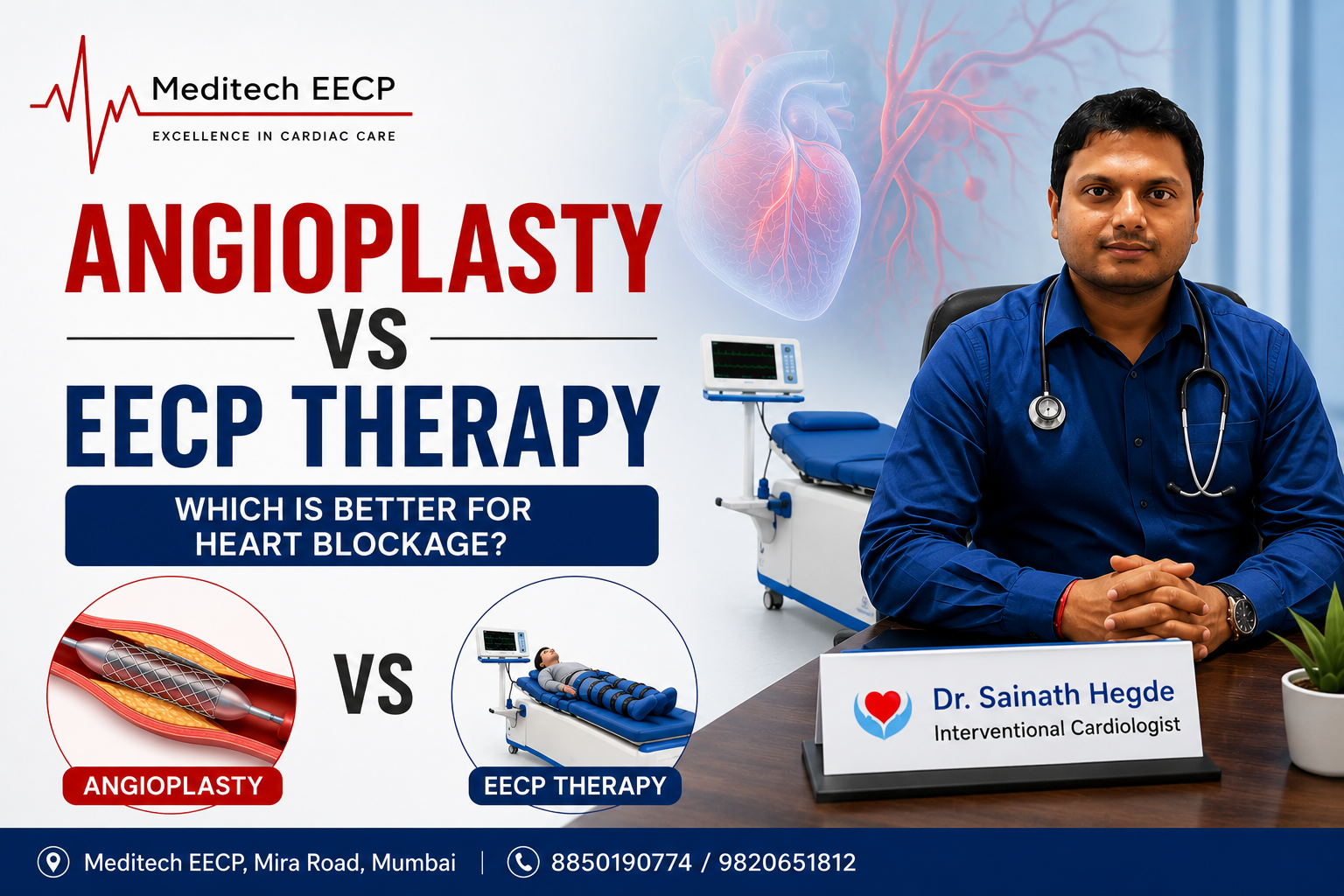
The comparison between Angioplasty vs EECP Therapy has become increasingly important as more patients seek less invasive options for managing coronary artery disease, chronic angina, and reduced blood flow to the heart.
While angioplasty is a well-established procedure that physically opens blocked arteries, EECP (Enhanced External Counterpulsation) offers a completely non-surgical approach aimed at improving circulation and encouraging the development of natural bypass blood vessels.
In this guide, we’ll compare both treatments in detail so you can understand which option may be appropriate for your condition.
What Is Angioplasty?
Angioplasty, also known as Percutaneous Coronary Intervention (PCI), is a minimally invasive procedure performed by an interventional cardiologist.
During angioplasty:
- A catheter is inserted through an artery.
- A balloon is inflated at the site of blockage.
- A stent is usually placed to keep the artery open.
- Blood flow is restored immediately.
Angioplasty is commonly recommended for:
- Severe coronary artery blockage
- Acute heart attack
- Unstable angina
- Critical narrowing causing significant symptoms
What Is EECP Therapy?
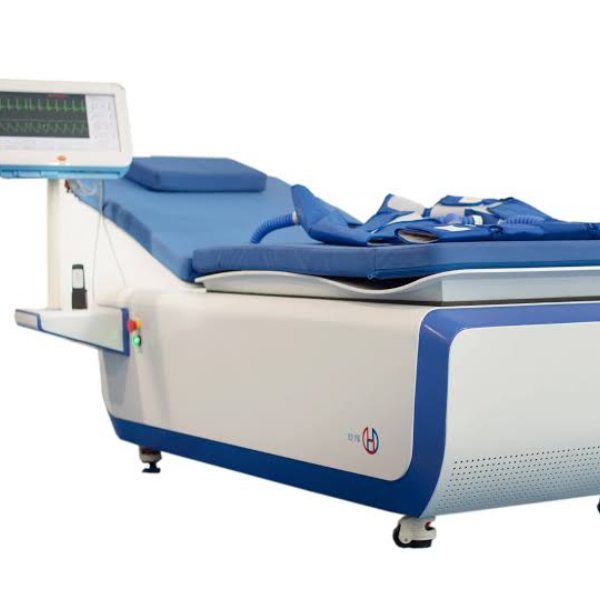
Enhanced External Counterpulsation (EECP) is a non-invasive treatment that improves blood flow to the heart without surgery or stents.
Large inflatable cuffs wrapped around the legs inflate and deflate in synchronization with the heartbeat.
This process helps:
- Increase blood supply to the heart muscle
- Improve oxygen delivery
- Reduce chest pain (angina)
- Improve exercise capacity
- Promote formation of collateral blood vessels (natural bypass channels)
EECP is typically performed over:
- 35 sessions
- 1 hour daily
- 6 to 7 weeks
Angioplasty vs EECP Therapy: Key Differences
| Feature | Angioplasty | EECP Therapy |
|---|---|---|
| Procedure Type | Invasive | Non-invasive |
| Stent Required | Yes | No |
| Hospital Admission | Usually required | Not required |
| Anaesthesia | May be needed | Not required |
| Recovery Time | Several days | No recovery downtime |
| Targets Specific Blockage | Yes | Improves overall circulation |
| Natural Bypass Formation | No | Yes |
| Risk of Restenosis | Possible | Not applicable |
| Suitable for Multi-Vessel Disease | Limited in some cases | Often beneficial |
| Cost | Higher | Usually lower |
How EECP Helps Create a Natural Bypass?
One of the most unique advantages of EECP Therapy is its ability to stimulate the development of collateral circulation.
When blood flow repeatedly increases during treatment:
- Dormant blood vessels may enlarge
- Small collateral vessels may develop
- Alternative routes for blood flow can form
This is why EECP is often referred to as a:
Natural Bypass Therapy https://meditech-eecp.com/natural-bypass-therapy-eecp-treatment-benefits/
Can EECP Remove Blockages?
This is a common misconception.
EECP does not physically remove plaque from arteries.
Instead, it works by:
- Improving blood circulation
- Enhancing endothelial function
- Increasing oxygen delivery
- Supporting collateral vessel development
Many patients experience significant symptom relief despite persistent blockages.
Who May Benefit More From Angioplasty?
Angioplasty may be recommended for:
- Acute heart attack
- Emergency coronary artery blockage
- Unstable angina
- Single critical blockage
- Patients requiring immediate restoration of blood flow
These situations require evaluation by an experienced interventional cardiologist.
Who May Benefit More From EECP Therapy?
EECP may be considered in patients who:
- Have chronic stable angina
- Continue experiencing symptoms despite medication
- Have diffuse coronary artery disease
- Have multiple blockages
- Are not ideal surgical candidates
- Want to explore non-surgical treatment options https://meditech-eecp.com/non-surgical-treatment-for-heart-blockage/
EECP Therapy for Patients With Heart Failure
Research and clinical experience suggest that selected heart failure patients may benefit from EECP. https://meditech-eecp.com/eecp-therapy-for-heart-failure-mumbai-mira-road/
Potential benefits include:
- Improved exercise tolerance
- Reduced fatigue
- Better circulation
- Enhanced quality of life
Recovery Time: Angioplasty vs EECP
Angioplasty
Recovery generally involves:
- Observation period
- Restricted physical activity
- Medication adherence
- Follow-up appointments
EECP Therapy
Patients typically:
- Walk into the treatment room
- Complete the session
- Resume daily activities immediately
No hospitalization is required.
Cost Comparison
Although costs vary by location and complexity:
Angioplasty generally involves:
- Cath lab charges
- Stent costs
- Hospital admission
- Specialist fees
EECP typically involves:
- Outpatient treatment sessions
- No stent cost
- No ICU stay
- No hospitalization
Many patients explore EECP because it may offer a more affordable treatment pathway.
What Does Dr. Sainath Hegde Recommend?
As an Interventional Cardiologist, Dr. Sainath Hegde believes treatment decisions should be individualized. https://meditech-eecp.com/best-eecp-specialist-cardiologist-in-mira-road-bhayandar-what-patients-should-know-before-choosing/
Not every patient requires angioplasty.
Not every patient is suitable for EECP.
Factors considered include:
- Severity of blockage
- Symptoms
- Heart function
- Stress test findings
- Angiography reports
- Overall health condition
The goal is always to choose the safest and most effective treatment strategy for the patient.
Why Patients in Mumbai Are Exploring EECP Therapy
Many patients today actively search for:
- Alternative to Angioplasty
- Angina Treatment Without Surgery
- Natural Bypass Therapy
- EECP Therapy Near Me
As awareness grows, EECP is increasingly becoming part of the conversation for patients seeking non-invasive treatment options under cardiologist supervision. https://meditech-eecp.com/best-eecp-centre-in-mira-road/
Final Thoughts
The choice between Angioplasty vs EECP Therapy is not about which treatment is universally better—it is about which treatment is most appropriate for your specific condition.
Angioplasty can provide rapid restoration of blood flow in critical situations.
EECP offers a non-surgical, non-invasive approach that may improve symptoms, enhance circulation, and support natural bypass vessel development in selected patients.
If you have been diagnosed with coronary artery disease or persistent angina, consult an experienced cardiologist to understand whether EECP Therapy could be part of your treatment plan.
FAQ
Is EECP better than angioplasty?
Neither treatment is universally better. Angioplasty may be necessary for critical blockages, while EECP may benefit selected patients seeking a non-surgical option.
Can EECP replace angioplasty?
In some patients, EECP may help manage symptoms and improve quality of life. However, it is not a replacement for emergency angioplasty when urgently required.
Does EECP remove arterial blockage?
No. EECP does not remove plaque. It improves blood flow and promotes collateral circulation.
Is EECP painful?
Most patients tolerate EECP well and report minimal discomfort.
How many EECP sessions are needed?
A standard course usually consists of 35 sessions over 6 to 7 weeks.
Is EECP safe for elderly patients?
Many elderly patients undergo EECP successfully, provided they are appropriately evaluated beforehand.


What Percentage Of Heart Blockage Requires Surgery? - Meditech EECP
June 3, 2026[…] severe blockages. Patients searching for alternative for angioplasty can read the following article https://meditech-eecp.com/angioplasty-vs-eecp-therapy/ as to which will be better for his clinical […]