







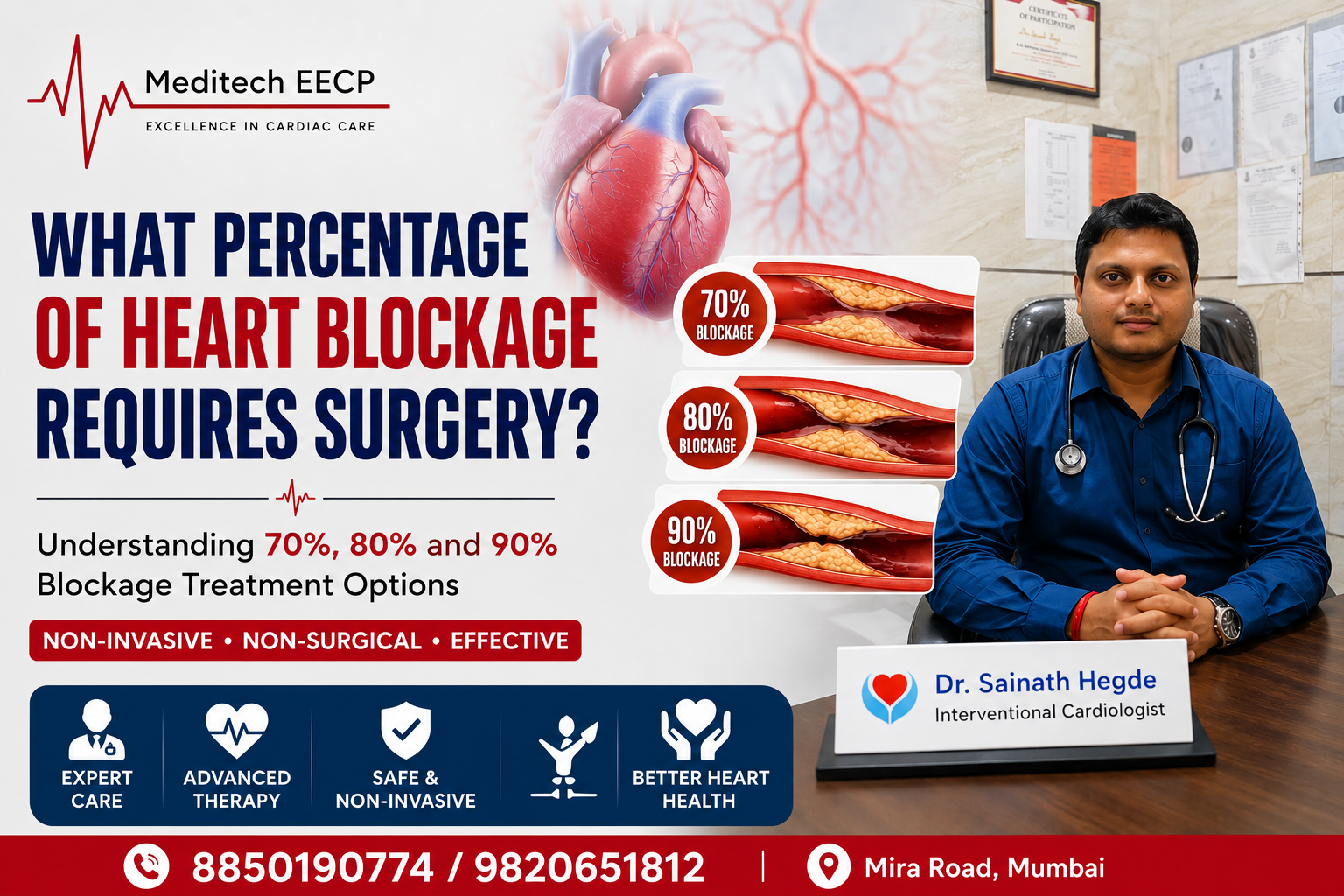
What Percentage of Heart Blockage Requires Surgery?
One of the most common questions patients ask after an angiography is: “My artery has a 70%, 80% or even 90% blockage. Do I need surgery immediately?” What Percentage of Heart Blockage Requires Surgery?
The answer is not always straightforward. The percentage of blockage is important, but cardiologists also consider symptoms, blood flow to the heart muscle, location of the blockage, heart pumping function, and overall patient health before recommending angioplasty or bypass surgery.
In many cases, patients may also explore non-surgical treatment for heart blockage options such as medications, lifestyle changes, and EECP therapy under the guidance of an experienced cardiologist.
Why Blockage Percentage Is Not the Whole Story
Many patients focus entirely on the percentage reported during angiography.
However, cardiologists often look at:
Location of the Blockage
A 60% blockage in a critical artery may be more concerning than an 80% blockage elsewhere.
Symptoms
A patient with severe chest pain may require treatment even with a lower percentage blockage.
Heart Function
Reduced ejection fraction may change treatment recommendations.
Number of Blocked Arteries
Triple vessel disease often requires a different approach compared with a single blockage.
Does a 70% Heart Blockage Require Surgery?
A 70% blockage is generally considered a significant narrowing of a coronary artery.
However, a 70% blockage does not automatically mean a patient requires angioplasty or bypass surgery.
Your cardiologist may evaluate:
- Presence of chest pain (angina)
- Stress test results
- Blood supply to the heart muscle
- Number of arteries affected
- Diabetes status
- Heart pumping function (LVEF)
When 70% Blockage May Not Require Surgery
Some patients with stable symptoms and adequate blood flow may initially be managed with:
- Optimal medical therapy
- Cholesterol-lowering medications
- Blood pressure control
- Lifestyle modifications
- Supervised cardiac rehabilitation
- EECP therapy in selected patients
When Intervention May Be Recommended
Angioplasty or bypass surgery may be advised if:
- Symptoms are severe
- Stress testing shows significant ischemia
- Multiple arteries are involved
- Left main artery disease is present
- Medications fail to control symptoms
What Is the Best 80% Blockage Treatment?
An 80% blockage indicates a severe narrowing of the artery.
Despite this, treatment decisions still depend on more than the blockage percentage alone.
Factors influencing treatment include:
- Single vessel vs multi-vessel disease
- Severity of symptoms
- Age and overall health
- Previous heart attack history
- Presence of diabetes
- Heart muscle function
Treatment Options for 80% Blockage
1. Medical Management
Some stable patients may continue with medications and monitoring.
2. Angioplasty
Suitable for many patients with localized severe blockages. Patients searching for alternative for angioplasty can read the following article https://meditech-eecp.com/angioplasty-vs-eecp-therapy/ as to which will be better for his clinical condition
3. Bypass Surgery
Often considered for complex or multiple vessel disease.
4. EECP Therapy
EECP may help selected patients who:
- Are not suitable for surgery
- Have persistent angina
- Want a non-invasive treatment option
- Have diffuse disease not easily treated with stents
Does a 90% Blockage Always Need Surgery?
A 90% blockage is considered critical and often significantly restricts blood flow.
However, even a 90% blockage does not automatically mean bypass surgery. Patient searching for a non surgical alternative to bypass surgery can click on to read the article https://meditech-eecp.com/alternative-to-bypass-surgery-eecp-the-non-surgical-hope-for-heart-blockages/
The decision depends on:
- Which artery is affected
- Whether symptoms are present
- Whether blood flow has adapted through collateral circulation
- Patient risk factors
- Overall clinical condition
Clinical Conditions Where Immediate Intervention May Be Needed
- Unstable angina
- Ongoing chest pain
- Heart attack
- Left main coronary artery disease
- High-risk angiography findings
Clinical Conditions Where Non-Surgical Options May Be Considered
Some patients cannot undergo surgery because of:
- Advanced age
- Severe kidney disease
- Reduced heart function
- High surgical risk
- Multiple medical conditions
In such situations, cardiologists may consider intensive medical therapy and EECP therapy as part of a comprehensive treatment plan.
Can Heart Blockages Be Treated Without Surgery?
In selected patients, treatment without surgery may be possible. Patients searching for a non surgical options for heart blockages can read our article https://meditech-eecp.com/non-surgical-treatment-for-heart-blockage/ for more information
This approach often includes:
Medication Therapy
- Antiplatelet medications
- Statins
- Blood pressure medicines
- Anti-anginal drugs
Lifestyle Modification
- Heart-healthy diet
- Smoking cessation
- Weight control
- Regular exercise
EECP Therapy
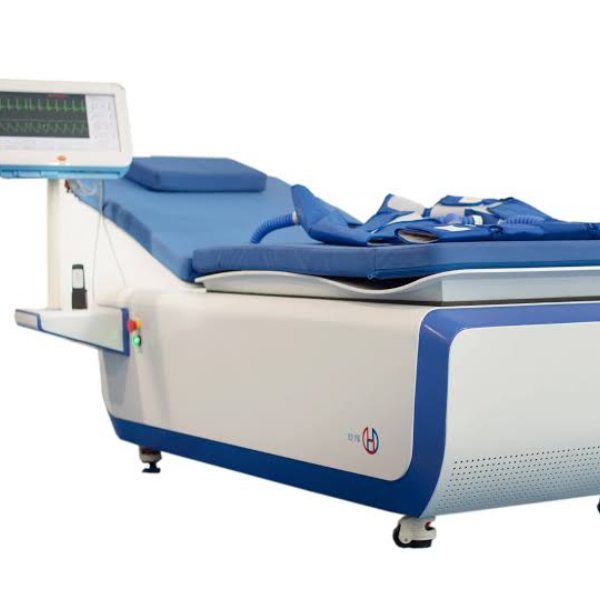
Enhanced External Counterpulsation (EECP) is a non-invasive treatment that uses inflatable cuffs around the legs to improve circulation and encourage the development of natural collateral blood vessels. you can read the article to understand the term collateral circulation commonly referred as natural bypass https://meditech-eecp.com/natural-bypass-therapy-eecp-treatment-benefits/ and how it will benefit a heart patient.
Benefits reported by many patients include:
- Reduced angina symptoms
- Improved exercise tolerance
- Better quality of life
- Reduced dependence on nitrate medications
EECP is often explored by patients searching for:
- Alternative to bypass surgery
- Alternative to angioplasty
- Non-invasive heart treatment
- Blocked artery treatment without surgery
When is Bypass Surgery Usually Recommended?
Bypass surgery is commonly considered when:
- Left main coronary artery disease is present
- Triple vessel disease exists
- Diabetes accompanies complex coronary disease
- Angioplasty is unlikely to provide lasting results
- Severe symptoms persist despite treatment
The decision should always be individualized after consultation with an interventional cardiologist.
EECP Therapy: A Non-Surgical Option for Selected Patients
Patients who may benefit from EECP include:
- Chronic stable angina patients
- Individuals not suitable for angioplasty
- Patients considered high-risk for bypass surgery
- Patients with diffuse coronary artery disease
- Heart failure patients under specialist supervision. Patients searching non surgical options for low heart pumping / heart failure / natural way to improve heart pumping can read our article https://meditech-eecp.com/eecp-therapy-for-heart-failure-mumbai-mira-road/
While EECP does not replace emergency treatment during a heart attack, it may provide symptom relief and improved quality of life for carefully selected patients.
Final Thoughts
There is no fixed blockage percentage that automatically requires surgery.
A 70%, 80%, or even 90% blockage must be interpreted in the context of symptoms, heart function, location of disease, and overall patient health.
Many patients can benefit from medical therapy, lifestyle modification, and in selected cases, EECP therapy as part of a comprehensive treatment plan. The best treatment decision should always be made after evaluation by an experienced cardiologist who can determine whether angioplasty, bypass surgery, or non-surgical management is most appropriate.
FAQ (Frequently Asked Questions)
1. Does a 70% heart blockage always require surgery?
No. A 70% blockage does not automatically mean you need bypass surgery or angioplasty. The treatment decision depends on several factors including symptoms, stress test results, blood flow to the heart, location of the blockage, heart pumping function (LVEF), and overall health. Many stable patients with 70% blockage can be managed with medications, lifestyle modification, and non-surgical treatment options such as EECP therapy.
2. What is the best treatment for 70% blockage in the heart?
The best treatment depends on the individual patient. Some patients may require angioplasty, while others may benefit from optimal medical therapy and EECP treatment. A cardiologist should assess whether the blockage is actually restricting blood flow significantly before recommending an invasive procedure.
3. Can 80% blockage be treated without surgery?
In selected patients, yes. Some individuals with 80% blockage who have stable symptoms and are not experiencing a heart attack may be candidates for non-surgical treatment approaches such as medications, risk-factor control, cardiac rehabilitation, and EECP therapy. The final treatment decision should be made after detailed evaluation by a cardiologist.
4. Is 80% blockage dangerous?
An 80% blockage can be serious because it may significantly reduce blood supply to the heart muscle. However, the degree of blockage alone does not determine risk. Factors such as plaque stability, symptoms, and heart function are equally important.
5. Does a 90% blockage always require angioplasty?
Not necessarily. While many patients with 90% blockage may be advised angioplasty or bypass surgery, treatment decisions should consider symptoms, blood flow studies, location of the blockage, and overall health condition. Some patients who are not suitable for surgery may benefit from EECP therapy under cardiology supervision.
6. What percentage of blockage usually requires bypass surgery?
There is no fixed percentage. Bypass surgery is commonly considered for:
- Left main coronary artery disease
- Triple vessel disease
- Complex multiple blockages
- Patients with diabetes and extensive coronary artery disease
- Patients with reduced heart function
The decision is based on overall coronary anatomy rather than a single blockage percentage.
7. What are the alternatives to bypass surgery?
Depending on the patient’s condition, alternatives may include:
- Optimal medical therapy
- Lifestyle modification
- Risk factor control
- Cardiac rehabilitation
- EECP therapy
- Angioplasty and stenting (in selected cases)
A comprehensive evaluation is required to determine the most appropriate option.
8. Can heart blockages be treated without open-heart surgery?
Yes. Many patients are successfully managed without open-heart surgery through medications, lifestyle changes, angioplasty, or EECP therapy. The suitable approach depends on the severity and pattern of coronary artery disease.
9. Is EECP therapy a non-surgical treatment for heart blockage?
Yes. EECP is a completely non-invasive treatment. It does not involve surgery, anesthesia, stents, or hospitalization. It is often considered for patients seeking a non-surgical treatment for heart blockages or those who are not candidates for invasive procedures.
10. Can a patient avoid angioplasty if they have coronary artery disease?
Some patients can be managed without angioplasty, particularly if they have stable symptoms and good blood flow to the heart muscle. Treatment should always be individualized after consultation with a qualified cardiologist.
11. How do I know if I need surgery for heart blockage?
You should consult a cardiologist who can evaluate:
- Severity and location of blockage
- Symptoms such as chest pain or breathlessness
- Stress test results
- Echocardiography findings
- Angiography reports
- Overall heart function
Only after a complete assessment can the most suitable treatment plan be determined.


Heart Pumping 20-25%: Can Ejection Fraction Improve Without Surgery? - Meditech EECP
June 11, 2026[…] of blocked arteries. Read our article on what percentage of blockages require surgery https://meditech-eecp.com/what-percentage-of-heart-blockage-requires-surgery/ and where surgery can be avoided […]